
AI animation styles
AI oil painting animation for myths, legends and history
Oil Painting turns each scene into a canvas: paint laid on thick with a palette knife, strokes you can follow with your eye, warm gold light against cool blue shadow. It gives a story weight, the sense of something old and important. Paste a myth, a chronicle or a chapter of a novel, and Insaga paints every scene with the same heroes.
100 free credits · no card
What the Oil Painting style looks like
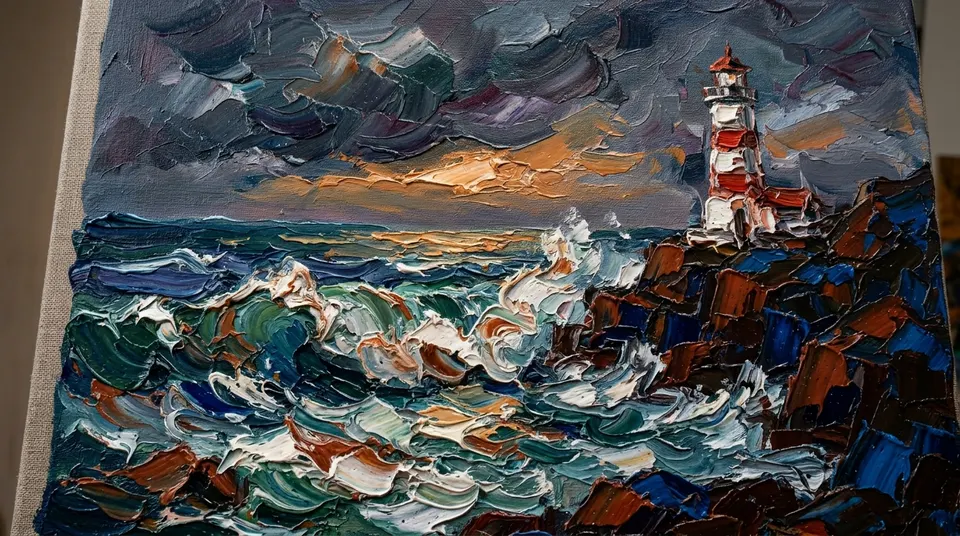
The surface is the point. Paint stands up from the canvas in ridges that catch light on their edges, and every stroke shows its direction and how loaded the brush or knife was. Look at the sea in the lighthouse frame: each wave is a separate slab of paint. There are no clean outlines; a contour appears where two strokes of different color meet. Linen canvas shows between the strokes, and in some frames the edge of the stretched canvas is visible too.
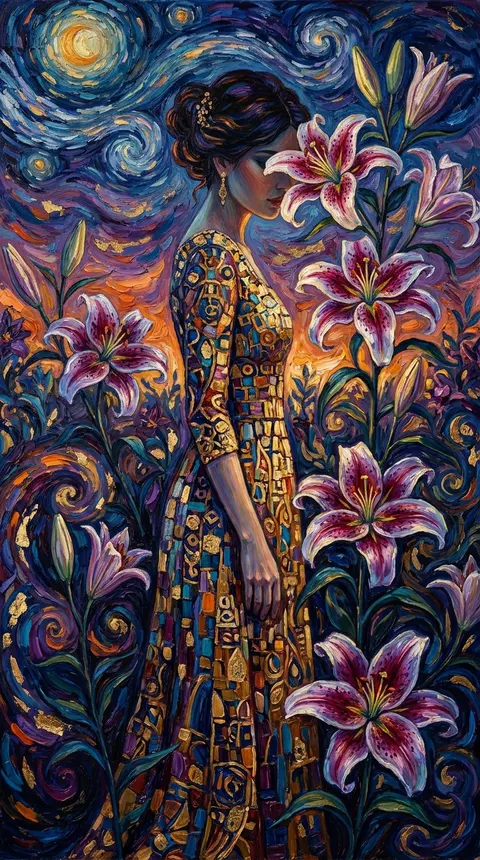
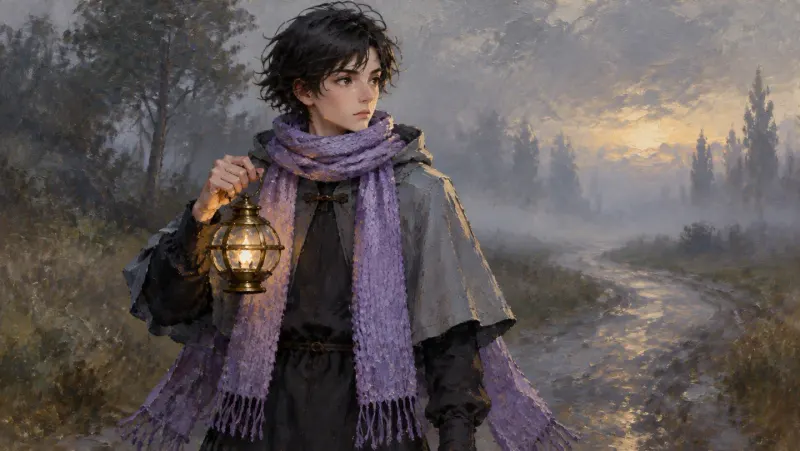
The palette is rich and saturated: cadmium yellow, cobalt blue, vermilion, viridian, burnt sienna, mixed on the canvas rather than on a palette. Light is warm and golden against blue-violet shadow, laid in broad masses rather than photographic detail. Faces are caught in a few confident strokes that suggest features instead of describing them; gesture and eyes matter more than anatomy. Backgrounds are loose, with depth made by a cool, faded distance and a warm foreground. The swirling sky in the vertical frame recalls Van Gogh. The thickness varies: the traveller frame below is smoother, closer to a classical canvas.
What to make in Oil Painting
- Myths and legends
- Greek heroes, Norse gods, dragons and river spirits. Painted like museum canvases, they look as old as the stories themselves.
- The story behind a painting or a painter
- An art history channel can tell a painter's life, or the night a famous canvas was made, in a look that belongs to the subject.
- Sea, storms and voyages
- Shipwrecks, lighthouse keepers, whaling towns. Thick paint suits water and weather, as the lighthouse frame shows.
- Classic novels retold
- A 19th-century novel in ten minutes: ballrooms, country estates, letters read by candlelight. Oil gives period drama its costumes and its glow.
More frames in oil
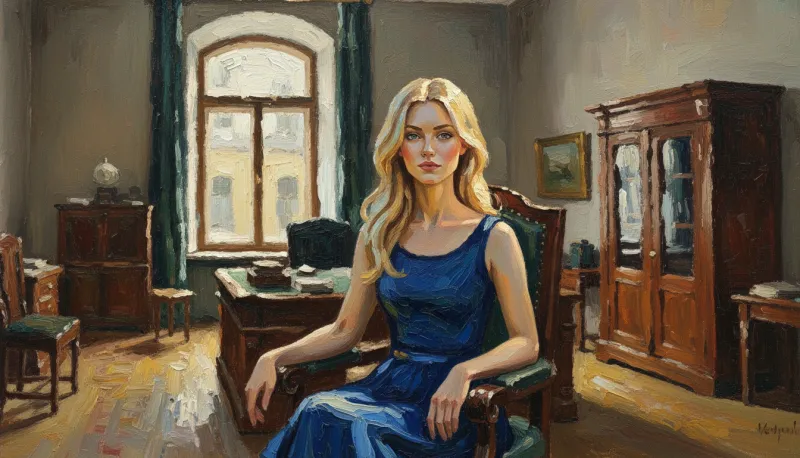
A frame from a story made in Insaga in this look, a woman in a blue dress in an old study, and the traveller from our short film “The Lamplighter”, redrawn in oil. The first has a painter's signature scribbled in the lower corner, something the style occasionally adds on its own.
How to make an oil painting video in Insaga
An oil frame is dense with texture and slow to read. Build the video around that.
Pick Oil Painting and Characters mode
Choose Oil Painting in the “Choose a style for your story” window. In Characters mode the heroes of a myth or a novel get reference sheets and keep their faces and costumes through the whole story.
Light every scene like a painter
Candlelight, storm light, a golden evening, firelight on armour. The style lives on warm light against cool shadow, so name both in the scene.
Choose the camera per story
Panoramic for seas, battles and landscapes; Portrait for faces and conversations. A myth usually needs both: first the sea, then the hero's face.
Move across the canvas
On the timeline, a slow pan or push-in over a still frame keeps every stroke in place and feels like walking through a gallery. On the Studio plan frames can also be animated into clips of about eight seconds. Add a narrator and export.
Oil Painting next to Watercolor, Realism and Rotoscopy
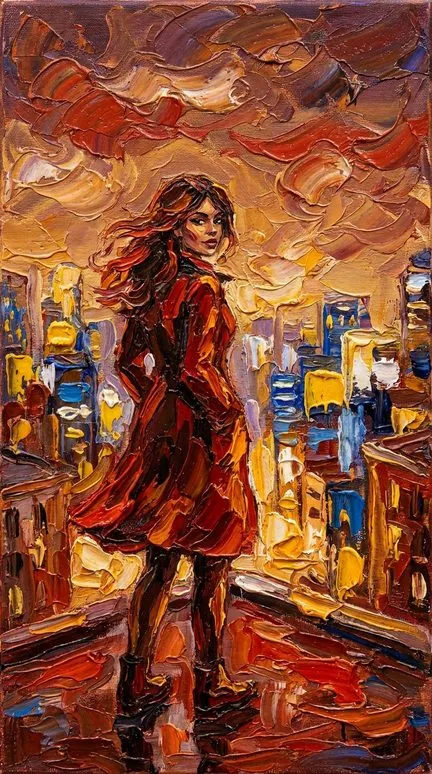
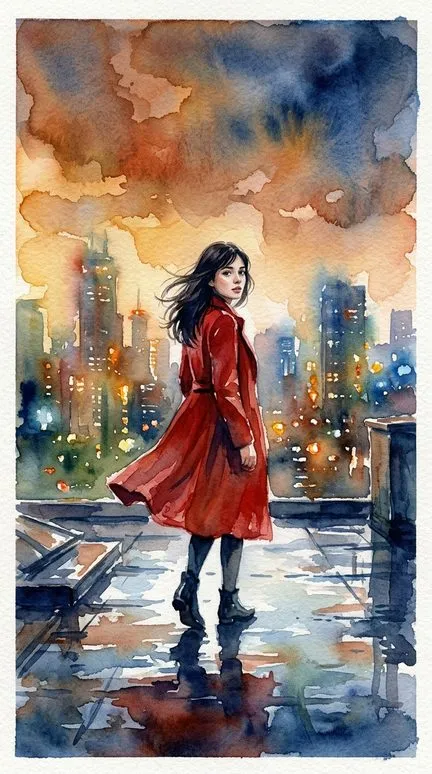
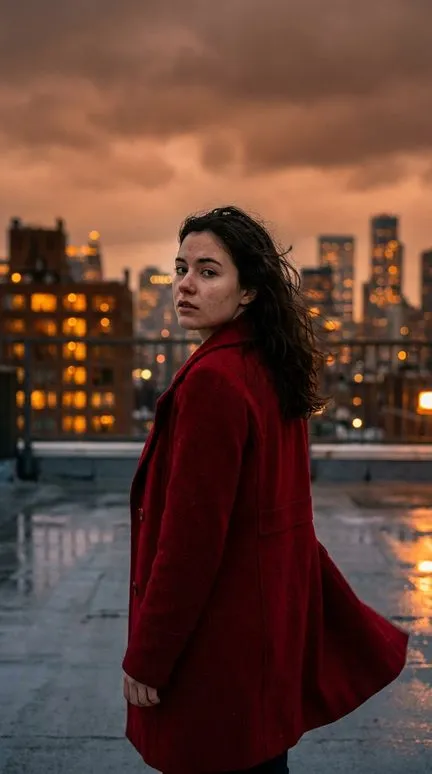
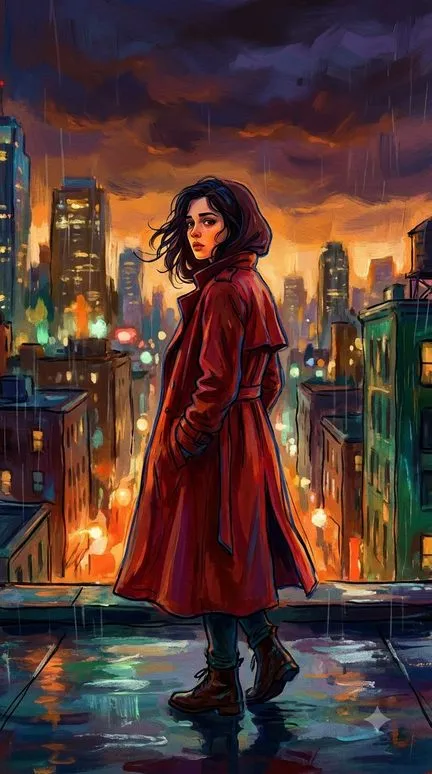
Watercolor is the light side of painting: transparent washes, white paper for light, calm instead of drama. Oil is opaque, heavy and theatrical. Realism shows the same people as a camera would, every pore sharp; Oil Painting keeps the realistic figure and turns it into an impression made of paint. Rotoscopy also lays brushstrokes over realistic forms, but adds wavering outlines and brighter, freer color, like film painted over by hand. Below, the rooftop heroine is painted all four ways.
Writing scenes that suit oil paint
Give heroes bold, simple features: a red cloak, a white beard, a golden helmet. Oil paints impressions, so small details such as a ring, a logo or the words on a letter get lost in the strokes. Do not hang the plot on them. Keep the color of their clothes constant; that is how a viewer spots them from afar.
Write big light and big weather: a storm at sea, sunset over a battlefield, a hall lit by a hundred candles. Night scenes work when a warm light source is in them; a scene with no light at all turns into dark mud. Crowds and armies read well as masses of color and light, so a battle can be one broad scene rather than twenty duels.
Where it does not fit: explainers with diagrams and on-screen text, modern tech topics, anything that needs crisp edges. For those, choose Vector minimalism or 2D Animation.
Questions about this style
Will it look like a real painting?
It looks like a photograph of a painting: thick paint, linen texture, sometimes even the edge of the canvas, as in the lighthouse frame. It is a new picture in the manner of oil, not a scan of an existing work.
Can I paint in the manner of Van Gogh or Monet?
The style already leans that way: impasto, swirling skies, broken color. It will not copy a specific canvas. For a manner that is only yours, build a custom style from reference images, available from the Director plan.
Why is there a signature in the corner?
Sometimes the style adds a painter's scribble, as on the woman in blue above. It is not anyone's real signature; if it bothers you, redraw that one frame.
Can I paint historical figures?
Insaga draws people from description. A famous name in the script is replaced with a general description of appearance, so you get a figure in the right costume and era, not a portrait likeness. Describe the look you want (age, uniform, hairstyle) and keep the name for the narration.
Does the brushwork survive animation?
With a slow camera move from the timeline over a still frame, every stroke stays exactly as painted. When a frame is animated into a clip on the Studio plan, the video is made from that frame, so review the clips where the texture matters most.
Can I try it for free?
Yes: a new account gets 100 credits, no card needed. That is enough to paint the heroes of your myth and the first scenes in oil. The paid plans add animation, voiceover and export: pricing.
Keep going
Put down the first stroke
Paste a legend, a chronicle or a chapter of a novel and choose Oil Painting. See how your heroes look on canvas.