
AI animation styles
Rotoscope-style AI animation, painted from text instead of traced footage
Rotoscopy looks like live action painted over by hand: real proportions and body language, wobbly outlines, color turned up a notch and brushstrokes following every form. Classic rotoscoping traces filmed actors. Insaga paints the same look straight from your script, with the same people in every scene and no camera involved.
100 free credits · no card
What the Rotoscopy style looks like
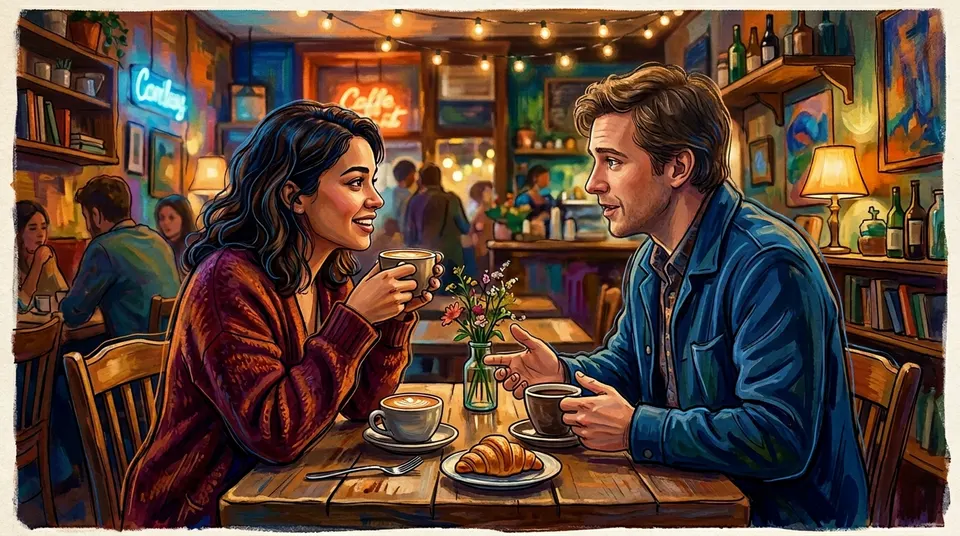
Outlines are the first thing you notice. They follow realistic forms but waver, thicken and thin like lines drawn by hand over a projected frame, and they change color with what they surround: dark brown on skin, deep blue on a denim jacket, black in the shadows. Proportions and gestures come from life. In the café frame you can read the whole conversation from her cupped hands and his open palm.
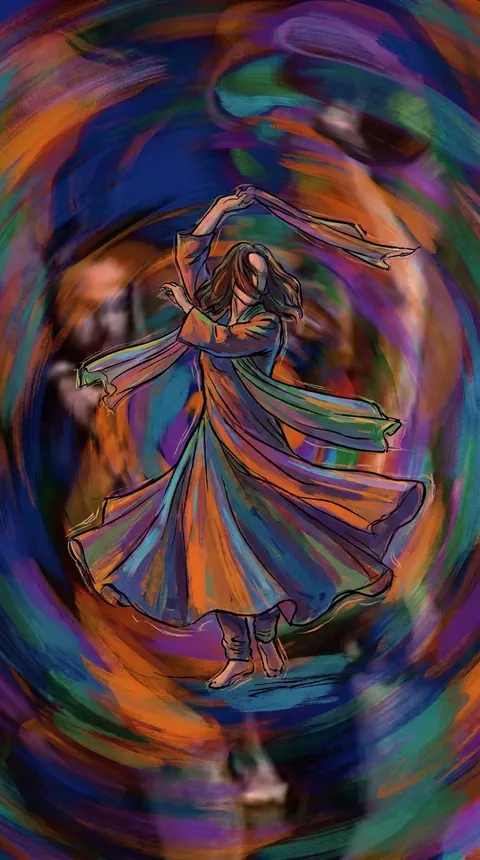
Color is reality turned up: cobalt skies, warm orange in the skin, deep green foliage, neon that glows a little more than it should. Visible brushstrokes run along each form, oil and watercolor textures over a photographic base. Light keeps its real direction but gets pushed, warm against cool, with halo-like rim light on the edges. Backgrounds keep true perspective while their surfaces are alive with paint. When a scene calls for it, neighbouring colors bleed into each other and the picture tips into the psychedelic, as with the spinning dancer. The look recalls films like A Scanner Darkly, Waking Life and Loving Vincent; Insaga is not connected to them.
What to make in Rotoscopy
- Conversations and everyday drama
- Two people at a table, a quarrel in a kitchen, a first date. Gestures and glances carry the scene, and the painted surface keeps it from looking like stock footage.
- Dreams, memories and altered states
- Psychology videos about dreams, anxiety or déjà vu, and stories where the narrator is not sure what was real. Color that drifts and bleeds says it without words.
- Monologues and spoken word
- A philosophical essay, a letter to a younger self, a poem read aloud. Painted faces hold attention on a voice that talks for minutes.
- Stories about music and dance
- A dancer before a show, a street musician, one night in a club. Movement and color are what this style does best.
How to make a rotoscope-style video in Insaga
There is nothing to film and nothing to trace. You write the scenes, and the style paints them.
Choose Rotoscopy
Paste the script and pick Rotoscopy in the “Choose a style for your story” window. Every frame, including the character sheets, is painted in it.
Write the acting
The style shows body language well, so write it down: “she laughs and wraps both hands around the mug”, “he leans in, palm open”. In Characters mode each person keeps their face across scenes.
Portrait for talk, Dynamic for movement
The Portrait camera favours medium close-ups and over-the-shoulder shots, the way conversations are filmed. For a dance or a chase, the Dynamic camera switches angles faster.
Mark the moments that should melt
If a scene is a dream or a memory, say so and name the colors: “the room melts into orange and violet”. Then voice it, cut it on the timeline and, on the Studio plan, animate the frames into clips of about eight seconds.
Rotoscopy next to 2.5D, Watercolor and Oil Painting
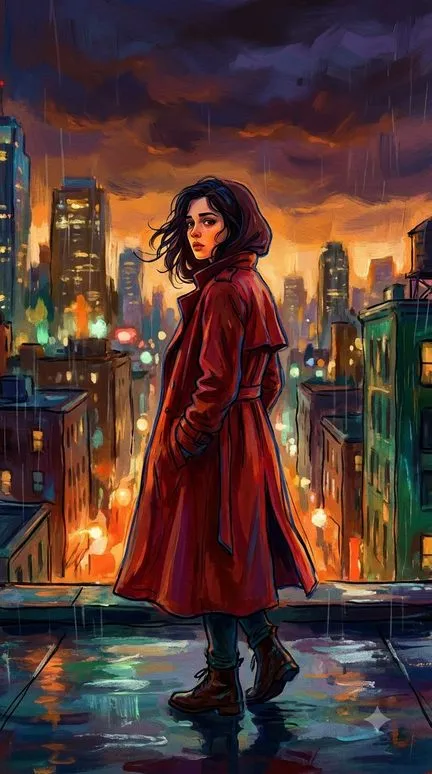
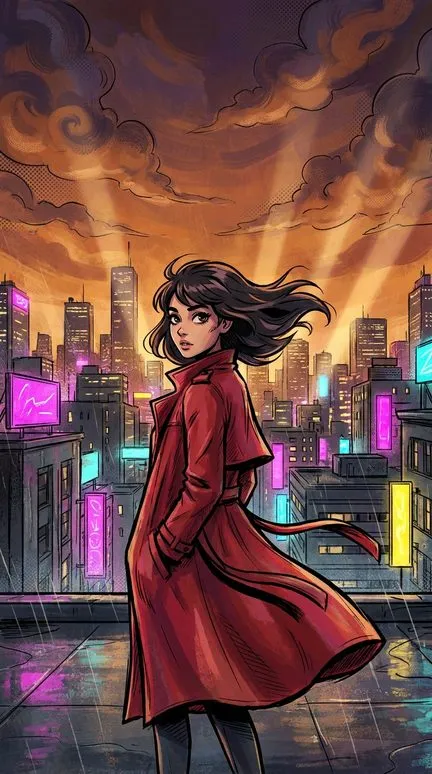
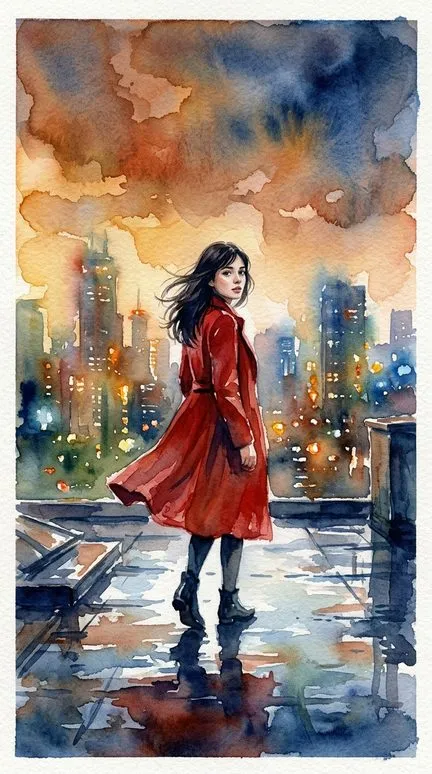
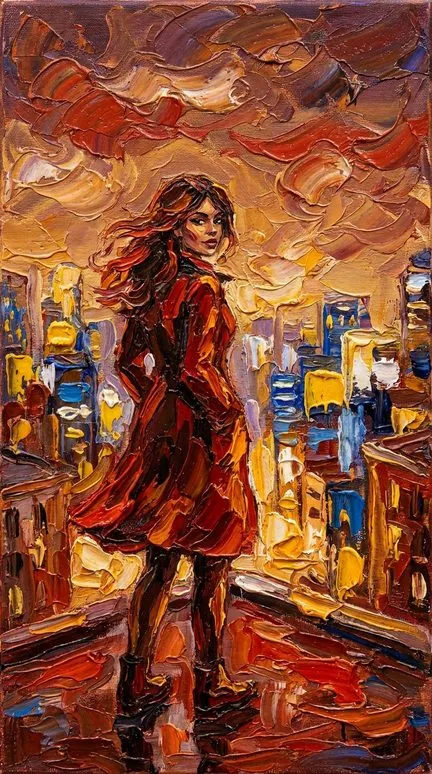
2.5D Spider-Verse also draws outlines over realistic volume, but its lines are crisp ink, its colors are neon and its scenes are action with speed lines. Rotoscopy is looser and slower, closer to a painted film. Watercolor drops the outline altogether and lets forms dissolve into paper and transparent washes. Oil Painting shares the love of brushwork, but its paint is thick and still, old-master in mood, without the flicker of a traced line. Compare the outlines on the heroine below, in all four styles.
Writing scenes for rotoscopy
Write people doing things. “A man in a room” gives the style nothing to work with; “a man paces by the window, tapping his phone against his palm” does. Everyday actions look best: pouring coffee, tying a shoelace, turning to answer. Faces carry emotion well too, so name it: tired, amused, about to cry.
Decide how strange each scene should be. By default the look stays grounded, a real café in heightened color. Dreams and memories can go further, and the contrast between the two is a tool in itself: an ordinary scene, then one where the colors start to swim.
Where it does not fit: explainers with charts and text, crisp product shots, battles with dozens of figures, where the wavering lines turn into noise. For clean graphics, choose Vector minimalism.
Questions about this style
Can I upload my own video to rotoscope it?
No. Insaga does not trace footage. Rotoscopy here is a look: each frame is painted from your script, so there is nothing to film and no one's real footage is used.
Will the characters stay recognisable?
Yes. In Characters mode each person gets a reference sheet, and faces stay readable under the paint. Signature clothes and hair help most, since the outlines and colors are meant to shift a little from frame to frame.
How psychedelic will it get?
As much as you ask for. A plain scene comes out grounded, like the café at the top of the page; a scene written as a dream, a trance or a memory can dissolve into swirls like the dancer.
Is this the look of A Scanner Darkly or Loving Vincent?
It is in their spirit: paint laid over realistic people. It does not copy either film, Insaga is not connected to their makers, and it will not draw their characters or actors.
How many frames does a ten-minute monologue need?
If every frame is animated, seven or eight per minute, since a clip runs about eight seconds. A monologue can hold one painted face longer under a slow camera move from the timeline, so it can get by with fewer.
Can I try the look before paying?
Yes. A new account gets 100 credits with no card: paint your main characters and a few scenes and see whether the outlines suit your story. To animate, voice and export, you need a paid plan; the options are on the pricing page.
Keep going
Paint your first scene
Paste a conversation, a dream or a monologue and choose Rotoscopy. The first frames will show how your people move under the paint.