
AI animation styles
AI watercolor animation for fairy tales, poems and quiet stories
Watercolor paints each scene in transparent washes on textured paper, with the white of the sheet left for light and edges that melt into it. It suits stories told slowly: a bedtime tale, a poem, a letter read aloud. Paste the text and Insaga paints every scene in this look, with the same heroes from page to page.
100 free credits · no card
What the Watercolor style looks like
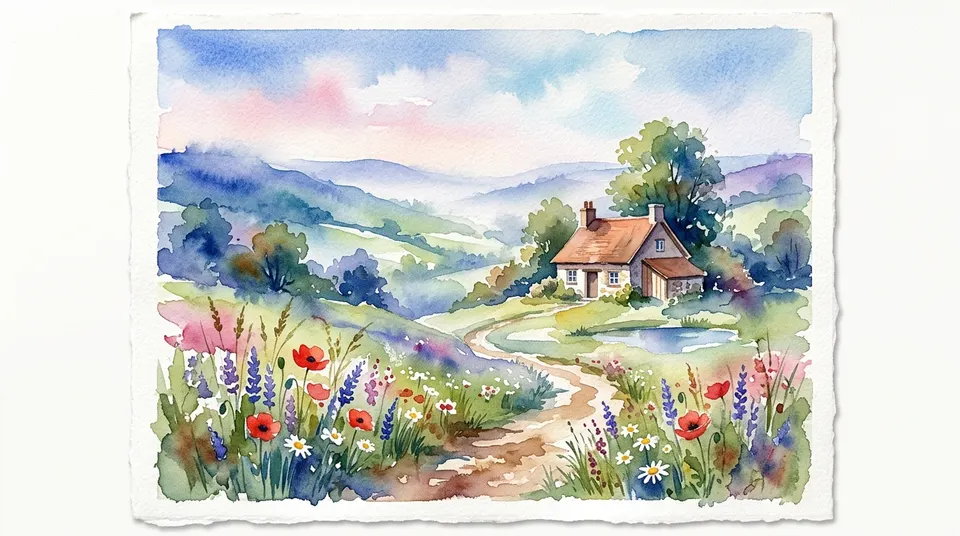
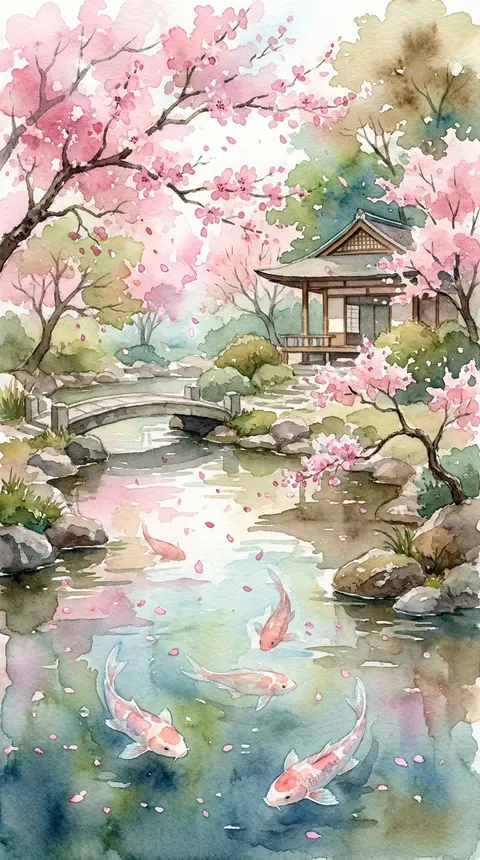
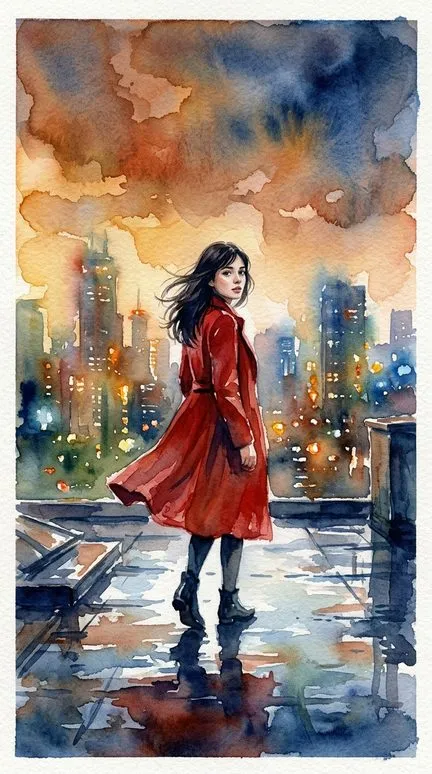
There are no hard outlines. Forms come out of layered transparent washes, light to dark, and where wet paint meets wet paper the edges bleed softly. Highlights are not painted in: they are the white of the paper left untouched, which is why the frames seem lit from inside. The palette is classic watercolor pigment: ultramarine, sap green, burnt sienna, cerulean, permanent rose. Shadows are cool blue-violet washes, never black.
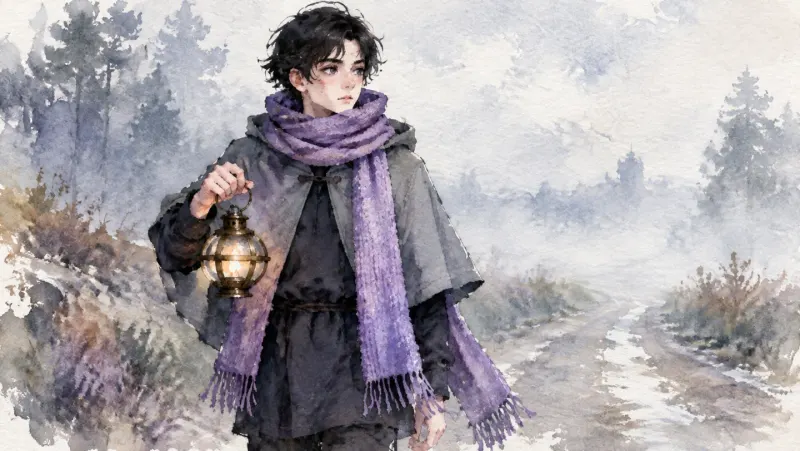
Rough cold-pressed paper shows through the thin layers. Detail gathers where the eye should go, on faces and eyes, while the edges of the picture dissolve: in the traveller frame below, the pines fade into white paper a hand's width from his shoulder. Skies and backgrounds are painted wet-on-wet, with blooms and ragged “cauliflower” edges, like the sunset behind the heroine. Proportions are natural. Sometimes the whole frame comes out as a sheet with a torn edge lying on white, as in the cottage landscape.
What to make in Watercolor
- Bedtime stories and fairy tales
- A fox who lost his way home, a girl and a paper boat. The soft palette and slow pace suit a voice meant to calm a child, not to grab attention at any cost.
- Poems and letters read aloud
- Each stanza or paragraph gets its own picture. Watercolor does not compete with the words, and the pauses between lines have room to breathe.
- Travel diaries
- A spring garden in Kyoto, a village in Provence, a grey morning on the coast. A painted sketchbook fits memories of places better than a photograph does.
- Sleep stories and calm narration
- Long, quiet narration over gentle landscapes. A frame can stay on screen for a long time without tiring the eye.
The Lamplighter's traveller in watercolor
The traveller from our short film “The Lamplighter”, redrawn in this style. His face, the violet scarf and the brass lantern are painted with care; the misty road and the pines are only suggested, and the paper does the rest. That is how the style keeps a recurring hero recognisable while staying loose.
How to make a watercolor video in Insaga
Watercolor is at its best when the video is slow. Set it up that way from the start.
Pick Watercolor and the right mode
Choose Watercolor in the “Choose a style for your story” window. For a poem or a sleep story without recurring heroes, Illustration mode is the fastest: each passage becomes a picture straight from the text. For a fairy tale with a hero, use Characters mode so the hero keeps one face.
Write weather and time of day
Mist, early morning, rain on a window, a late summer evening. Washes are made for atmosphere; a scene without it comes out thin.
Use the Panoramic camera for places
Panoramic favours wide and very wide shots, with a few closer frames for feeling. It suits landscapes, gardens and travel pages.
Keep the edit slow
On the timeline, use slow push-ins and soft transitions, a calm narrator from 6,000+ voices and your own music. Let each frame stay for a sentence or two.
Watercolor next to Oil Painting, Sketch and Realism
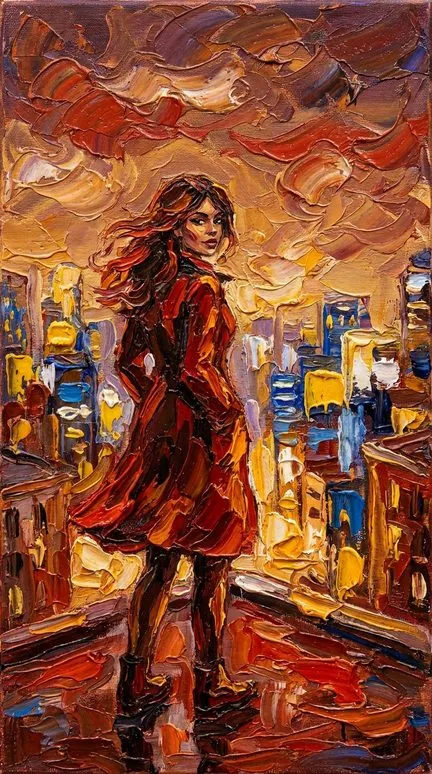
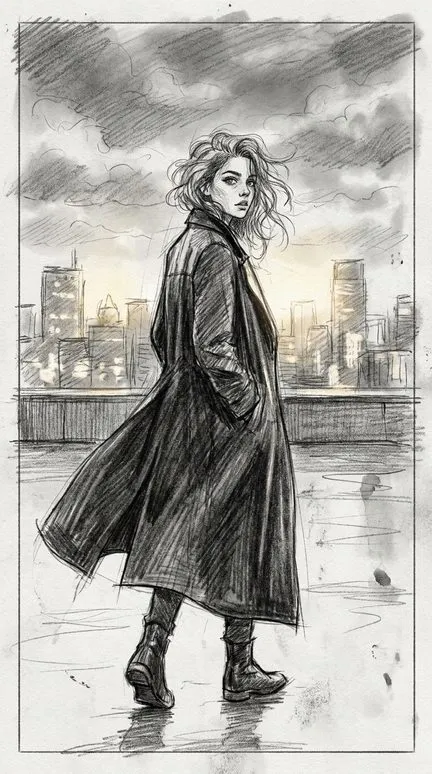
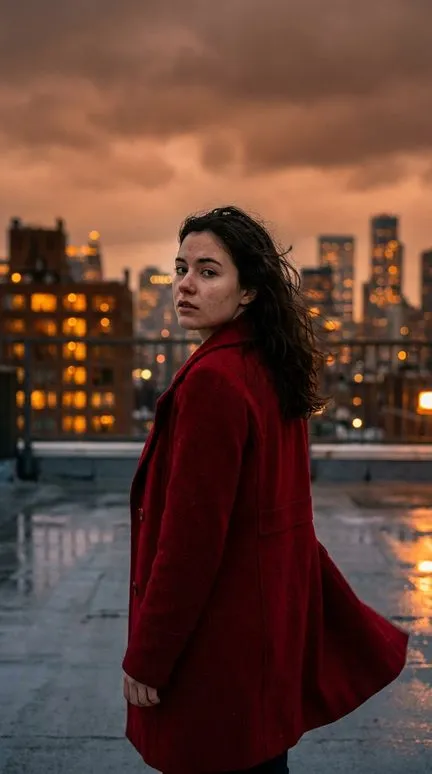
Oil Painting is painting too, but opaque and heavy: thick strokes, warm gold against deep blue, drama rather than calm. Watercolor is light and transparent, and the paper does half the work. Sketch keeps the notebook but swaps paint for pencil: lines and crosshatching instead of washes, graphite instead of color. Realism is the far end: every pore sharp, nothing left to the viewer's imagination. The heroine below goes from a photograph to a watercolor sheet.
Writing for a watercolor video
Put fewer things in each scene: one hero, one place, one light. Watercolor works by leaving things out, and a scene listing ten objects turns into a muddy page. “A girl on a bridge in the morning mist” paints better than a full inventory of the market square.
Lean on color words and seasons: cherry blossom, autumn rain, a pink evening sky. They give the washes something to do. Loose edges also forgive small differences between frames, which helps in a long tale.
Where it does not fit: fights and chases, machines, dense cities full of signs, horror. Shadows here are blue rather than black, so a scary story loses its teeth; choose Noir for that. For a drawn look with more line, try Sketch.
Questions about this style
Is watercolor a good choice for a kids' channel?
Yes, especially for bedtime stories and fairy tales. Invent your own heroes: the studio will not draw well-known cartoon characters, but classic tales can be retold with characters designed your way.
Will my hero look the same in every scene?
In Characters mode, yes: the hero is set up on a reference sheet and repainted from it in every frame, like the traveller on this page. Faces and signature details hold, while backgrounds are allowed to stay loose.
Why does a frame have a white paper border?
The style sometimes paints a scene as a sheet with a torn edge, like the cottage landscape at the top. Some channels keep it as a signature; if you want the picture to fill the frame, redraw that single frame.
How does a watercolor frame move in a video?
On the Studio plan each frame can be animated into a clip of about eight seconds. For calm narration, a slow push-in or pan from the timeline's 12 camera motions is often all a painted frame needs, and it keeps every wash exactly as painted.
Can it paint in my own watercolor manner?
Yes, with a custom style built from reference images of your own paintings, available from the Director plan. It is saved and works like a built-in style in every new project; see pricing.
Can I make a long sleep story?
Yes. The text can run from a single page to a whole book; if it does not fit into one project, the limit for your account is raised. Illustration mode keeps a long story without recurring heroes fast.
Keep going
Paint the first page
Paste a fairy tale, a poem or the first chapter of a quiet story and choose Watercolor. The first frames will show whether it is the right paper for your words.