
AI animation styles
Underground comic animation: satire and absurd stories in cross-hatched ink
Underground Comic draws the way the counterculture comix of the late 1960s did: thick, wobbly dip-pen ink, obsessive cross-hatching, colours that clash on purpose and people caricatured to the edge of the grotesque. Paste a story with a crowd, a scandal or a very bad idea in it, and you get panels where every face is at its loudest.
100 free credits · no card
What Underground Comic looks like
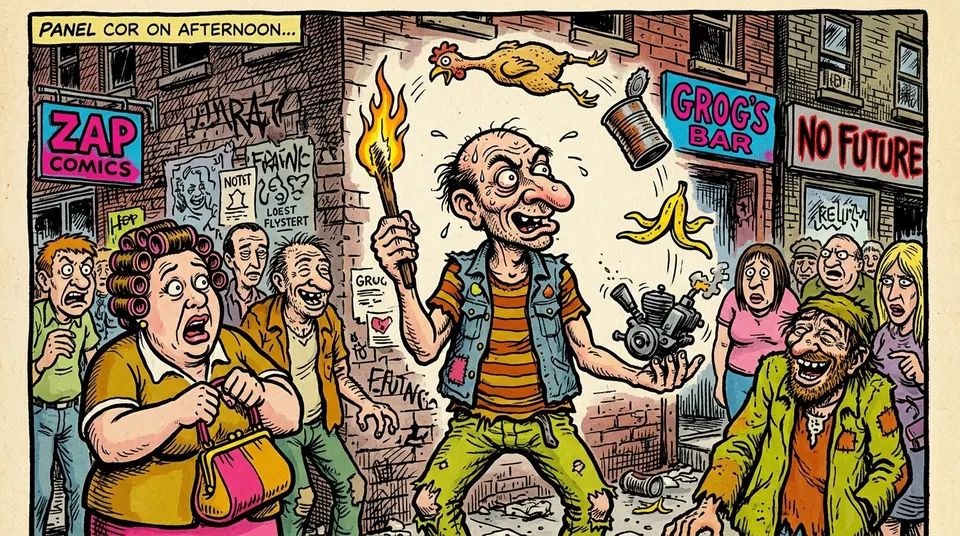
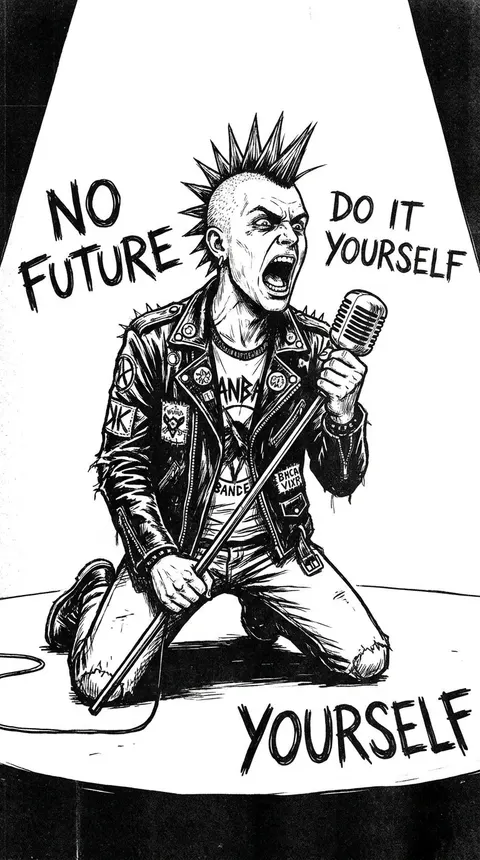
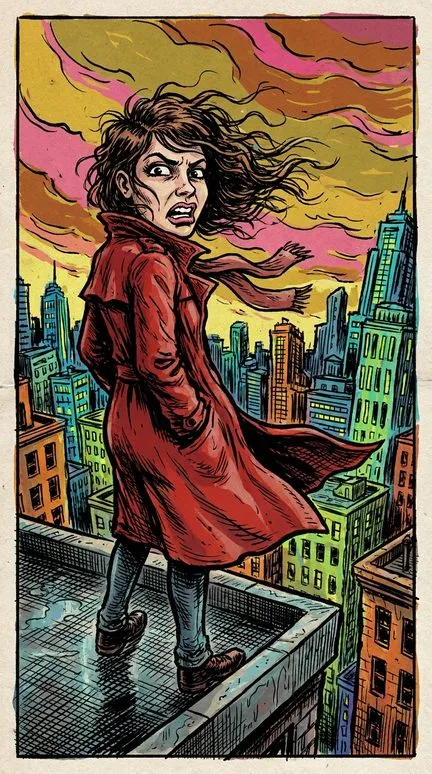
The line looks hand-made because it is meant to: thick, confident dip-pen outlines with the wobble of India ink, pooling where strokes cross, and dense cross-hatching for every shadow and texture. Colour is loud and deliberately garish: burnt orange, mustard, hot pink and blood red against electric blue and acid green. The fills are flat, with the occasional brushy wash, and the colour sits slightly out of register, as if printed on newsprint.
Light matters less than line. Frames are lit flatly, with a spot of solid black here and there for emphasis. People are caricatures three to five heads tall: enormous noses, bulging eyes, jutting chins, bodies that are stocky, lumpy or impossibly gangly, yet drawn with every wrinkle and pore. Expressions are frozen at their peak, mouths wide open, eyes popping, hands flung out. Backgrounds swing between an obsessively hatched street and bare white space that leaves a character alone on the page, like the punk singer above.
What to make with it
- Satire and social commentary
- Office life, bureaucracy, a residents' meeting that goes off the rails. Caricature lets you say something sharp about types of people without pointing at anyone real.
- Absurd stories from life
- The neighbour who kept a goat on the balcony, the worst job you ever had, a wedding that went wrong. First-person storytime for adults gets pictures as exaggerated as the telling.
- Music history
- Punk, garage rock, the first festival in a muddy field. The style grew out of the same counterculture, so a band's origin story looks at home in it.
- Weird history and odd facts
- Snake-oil sellers, dancing plagues, failed inventions demonstrated to horrified crowds. Crowds are where this style shines: every face in them reacts in its own way.
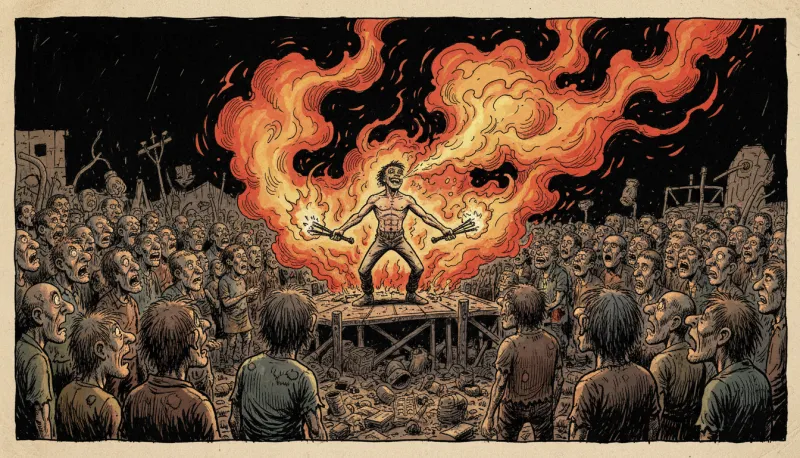
A frame from a story in this look
This frame comes from a story made in Insaga in this look: a fire-breather on a rickety stage and a crowd in which no two faces react alike. That density of reactions is what the style brings to a crowd scene.
How to make an underground comic video in Insaga
Four steps, tuned for caricature.
Paste the story with its cast
In the Characters mode each oddball gets a reference sheet with poses and expressions, so the man with the enormous nose has the same nose in every scene. Caricature depends on it.
Choose Underground Comic
In the “Choose a style for your story” window, pick Underground Comic. Every frame, sheets included, comes out in its ink and colours.
Panoramic for crowds, Portrait for rants
Crowd scenes want the Panoramic camera, which favours wide shots. A character's monologue wants Portrait, which stays close on the face while it does its worst.
Voice the cast, loudly
Give each character a voice of their own from 6,000+, add subtitles in one of 31 styles and export an MP4 in 1080p or 4K.
Underground Comic and its neighbours
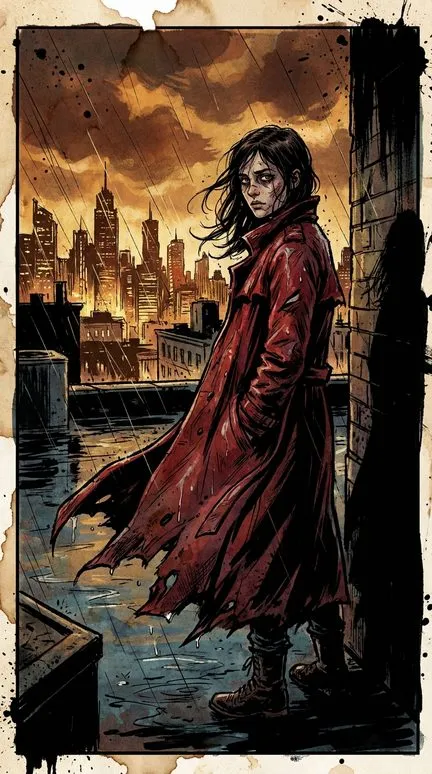
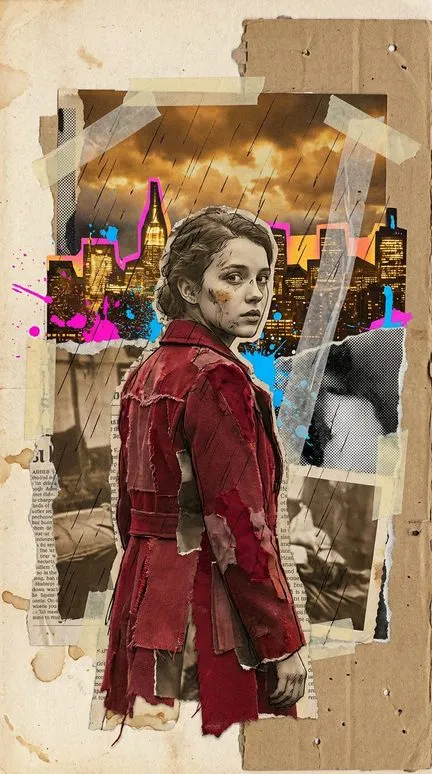
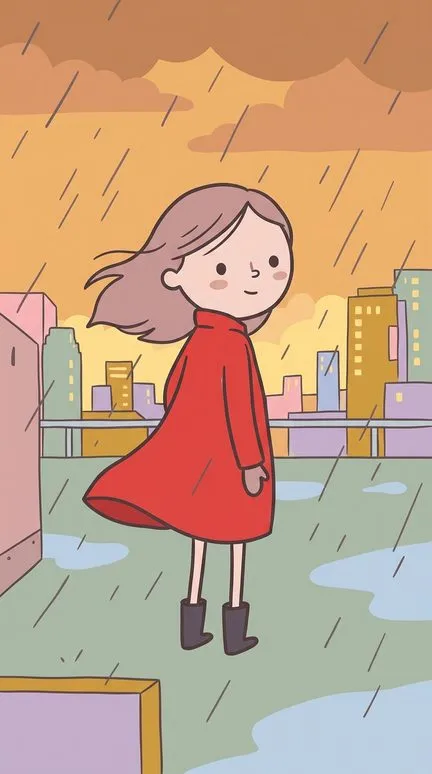
Dirty Comics shares the rough ink but aims at menace, not laughs: realistic proportions, scars, heavy black and neon rain. Collage Animation comes out of the same zine culture but cuts and pastes instead of drawing: torn paper, old photos, masking tape. Quirky Minimalist is caricature with the detail stripped out: big round heads, dot eyes, pastel fills and no shading at all. Underground Comic is the busiest of the four, the one where every pore gets a line. Below, the heroine in all four.
Writing for caricature
Write emotions at their peak. “He is annoyed” gives a mild face; “he screams at the vending machine until his hat falls off” gives the style something to caricature. One gag per scene works better than three. Crowds, markets, queues and concerts are worth writing in on purpose, because every extra face gets its own reaction. Name the signs on the street if you want particular ones; otherwise the model fills the walls with lettering of its own, and not all of it spells anything.
This is not a look for children, and not for stories that ask for tenderness: a grieving character with bulging eyes reads as mockery. It is also wrong for brands that need to look polished. And caricature has a limit here: the style draws invented people. Real politicians, celebrities or your neighbour by name and face are ruled out by the Acceptable Use Policy, so draw types, not portraits.
Questions about this style
Can I caricature a real politician or celebrity?
No. The Acceptable Use Policy rules out likenesses you do not hold the rights to. Invent a character who stands for the type; satire usually lands better that way anyway.
Why is there random lettering on the walls?
Posters, shop signs and graffiti are part of the look, and the model fills them in by itself, sometimes with nonsense words. If a sign matters to the story, write its text into the scene; if a frame comes out too cluttered, redraw it.
Is it suitable for kids?
No. The style is made for adult humour: grotesque bodies, screaming faces, rough edges. For a funny cartoon for children, look at Classic Cartoon.
Can the background be plain white?
Often it is: the style alternates between densely hatched streets and bare white paper around a figure. If you want the white, describe the character alone, without a location.
Can it tell a serious story?
A bitter one, yes. Satire, cautionary tales and black comedy work; sincere grief and romance fight the caricature.
Keep going
Put your strangest story on the page
Paste it, pick Underground Comic and see the cast before you pay: 100 free credits, no card. Animation, voiceover and export are on paid plans.