
AI animation styles
Classic cartoon style by AI, from script to video
Classic Cartoon draws your story the way theatrical shorts of the 1940s and 50s looked: rounded characters that squash and stretch, four-fingered hands in white gloves and warm painted backdrops behind them. It is made for slapstick, chases and fables with animal casts, and Insaga keeps the cat, the mouse and the badger the same from gag to gag.
100 free credits · no card
The golden-age look, line by line
Outlines are smooth and black, three to four pixels thick, with a slight brush taper that makes them feel inked by hand. The palette leans on rich primaries, sunshine yellow, fire-engine red and cobalt blue, with pumpkin, forest green and plum around them and soft pastels for skin. Shading is cel animation with an airbrushed softness: three or four steps from light to shadow, and shadows tinted a warm purple-brown rather than grey. The key light is warm and comes from the upper right.
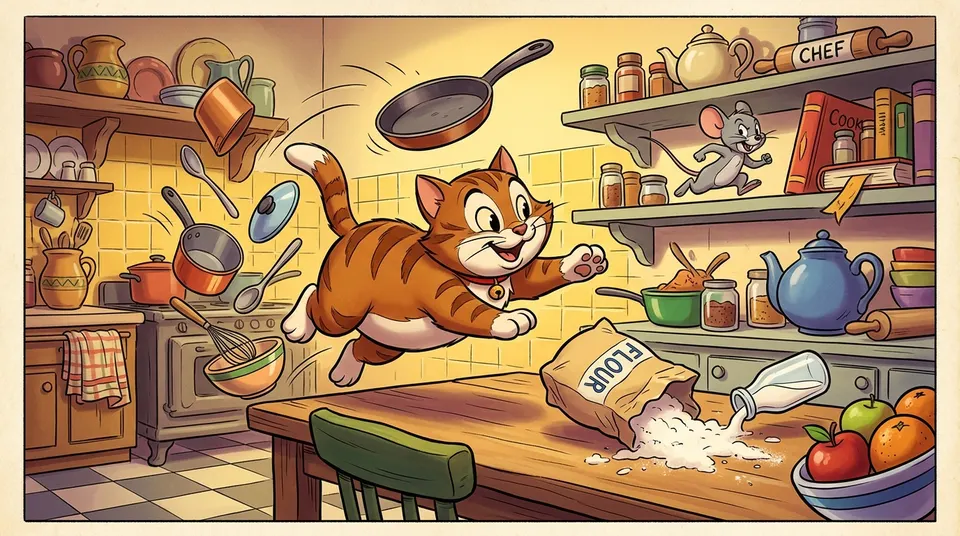
Characters are rounded and built on clear silhouettes, with heads a third or a quarter of the body and eyes that take up almost a third of the face. Poses exaggerate: the cat in the kitchen frame is mid-leap, stretched from paw to tail. Hands have four fingers, often in white gloves. Behind the characters sit lush painted backdrops in softer, slightly faded tones, so the figures pop forward. The style stays away from 3D, flat modern design, anime and anything dark or gritty.
Stories that want a classic cartoon
- Chases and slapstick
- A cat after a mouse through a kitchen, a dog guarding a picnic from ants. Every scene is a clear action and a clear reaction, which is exactly what squash-and-stretch poses are built to show.
- Fables with animal characters
- The tortoise and the hare, the fox and the crow, or fables you write yourself. A moral lands better when a fox in a waistcoat delivers it.
- Nostalgic family comedy
- A grandfather's fishing trip that goes wrong, a birthday cake that will not survive the afternoon. The golden palette reads as comfort even when everything is falling apart.
- Picture-book mysteries
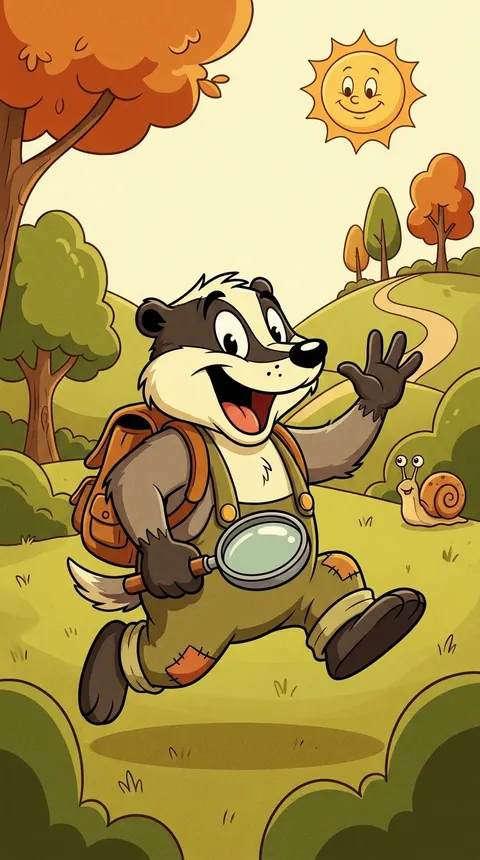
- A badger detective with a magnifying glass, like the tall frame, following clues across the meadow. Gentle suspense, no gore, and a cast young viewers will recognize in the next episode.
How to make a classic cartoon short in Insaga
A gag-driven story needs a slightly different approach than a narrated one.
Write the gags as beats
Set-up, chase, crash, reaction: give each its own sentence or two, because Insaga splits the text into scenes along the story. A gag squeezed into one sentence becomes one frame.
Pick Classic Cartoon and Characters mode
Choose the style in the “Choose a style for your story” window. In Characters mode the cat, the mouse and the dog each get a reference sheet with poses and expressions, so the ginger stripes and the bell on the collar come back in every scene.
Use the Dynamic camera for chases
The Dynamic camera preset reaches for low angles, tilted frames and sudden close-ups, which suits a chase. For a quiet fable, Portrait keeps the focus on faces.
Add voices and your music
On paid plans give each animal its own voice from 6,000+, add your own music track and transitions, and export the finished short. On Studio the approved frames come alive as clips of about eight seconds each.
Classic Cartoon, 2D Animation, Rubber Hose or Claymation
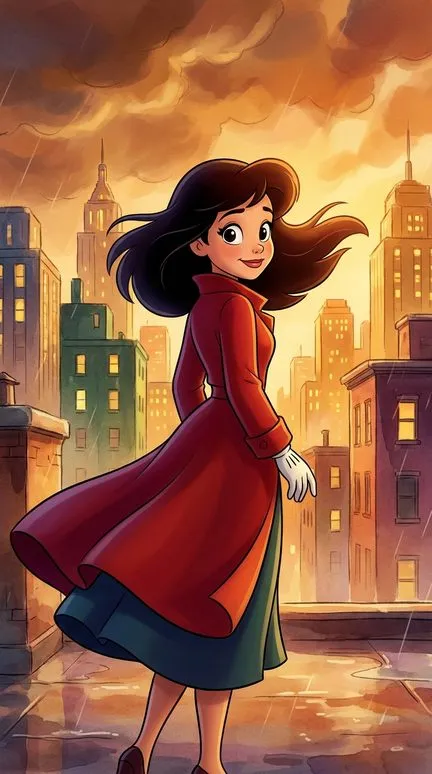
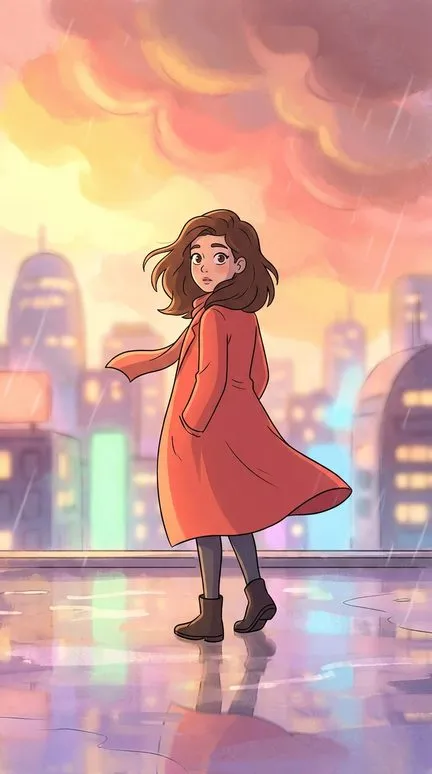
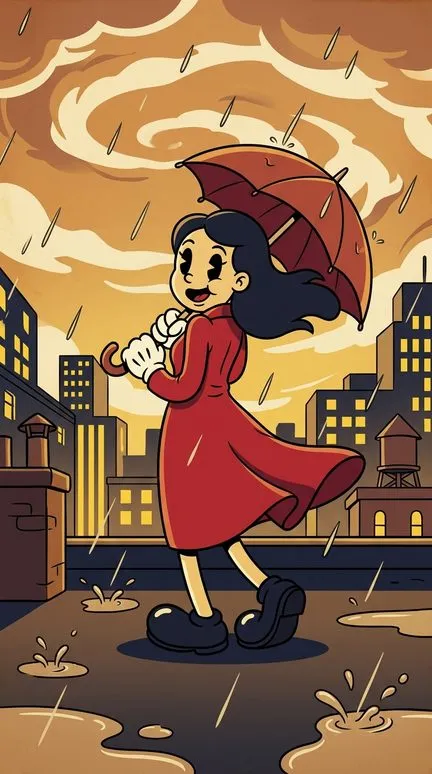
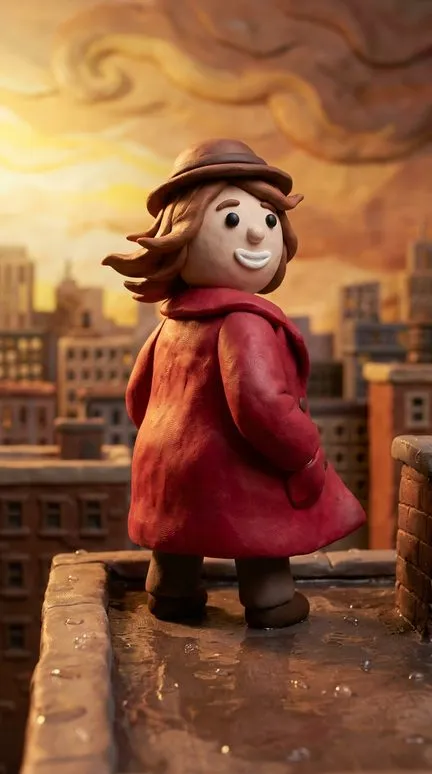
The heroine in the red coat looks different in each of the four frames below. 2D Animation is the modern cousin: cleaner, cooler light and a more contemporary face. Modern Rubber Hose goes a decade further back, to the 1930s: pie-cut eyes, noodle limbs without elbows and flat color with no gradient at all. Claymation keeps the cartoon warmth but turns it into sculpted plasticine on a miniature set. Classic Cartoon is the golden middle: soft shading, painted skies and characters that are expressive without being rubbery.
Getting the most from a classic cartoon
Think in pairs: a chaser and a chased, a trickster and a fool. Opposites give the squash-and-stretch poses something to push against. Describe animals by one or two costume details, a collar with a bell or patched overalls, and let the species do the rest.
Give the story a home base: a kitchen, a farm, a riverbank. The painted backdrops shine in places full of objects to knock over, and returning to the same place makes the gags feel like a series.
The style struggles with modern technology and serious subjects. Smartphones, office screens and news-style retellings look out of place in its golden palette, and it cannot do real menace: villains come out charming. For darker material, use the noir or comic styles.
Questions about this style
Can I make a cat-and-mouse chase?
Yes, with your own cat and mouse. Insaga will not draw recognizable characters from famous cartoons, so give yours a look of their own: a ginger coat and a bell on the collar, a grey mouse with oversized ears. They stay that way in every scene.
Do the animals have to wear clothes?
No. The style draws plain animals just as well; clothes and props simply give viewers something extra to recognize them by. Write whatever your story needs into the character description.
Can the characters talk to each other?
Yes. Write the dialogue into the story; on paid plans each character gets its own voice from 6,000+ and the narrator another. The lines are voiced over the finished scenes in the editor.
Can I tell a fable in verse?
Yes. Paste the verse as it is: Insaga splits it into scenes along the story, and a narrator reads it over the frames. Rhymed fables suit the storybook warmth of this style.
Can I try it on my own story for free?
Yes. A new account comes with 100 credits and needs no card: enough to draw your animal cast and the first gag. Animation, voiceover and export are on paid plans.
Keep going
Write the first gag
Paste your story and pick Classic Cartoon. The first 100 credits are free, no card required.