
AI animation styles
AI stickman animation from your own script
Stickman is the loudest style with the fewest lines: circle heads, dot eyes, thin rubbery limbs and reactions blown up to fill the frame. Paste a storytime script or an explainer, and Insaga draws each beat as a stick-figure scene, with the same little cast from the first joke to the last.
100 free credits · no card

What the stickman look is made of
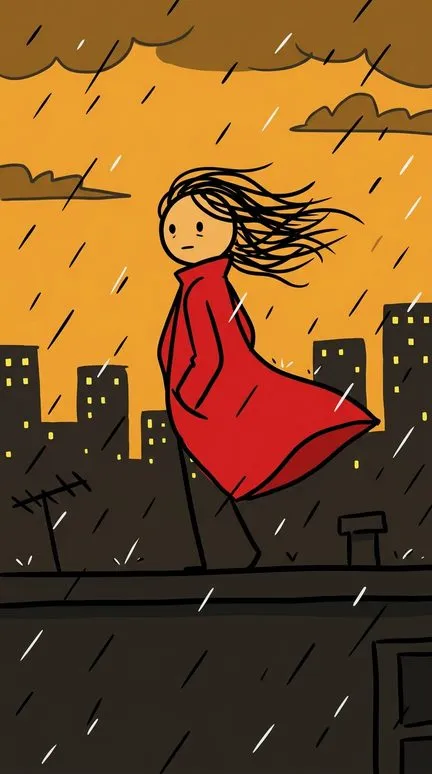
Bodies are ovals or nothing at all; arms and legs are single lines that stretch as far as the pose needs. Heads are circles with two dots and a line for a mouth, drawn in thick black marker that looks inked by hand rather than traced. There is no shading, no gradient and no texture. A scene holds three or four colors at most: black, white and one or two flat accents, like the cyan desks in the office frame or the red coat on the rooftop.
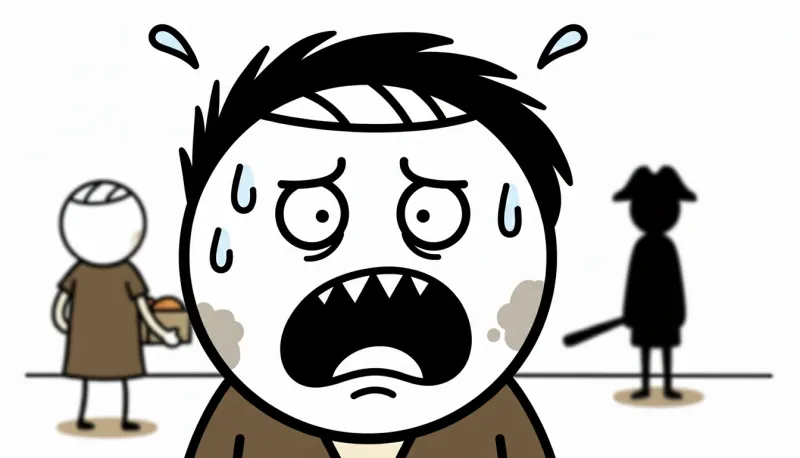
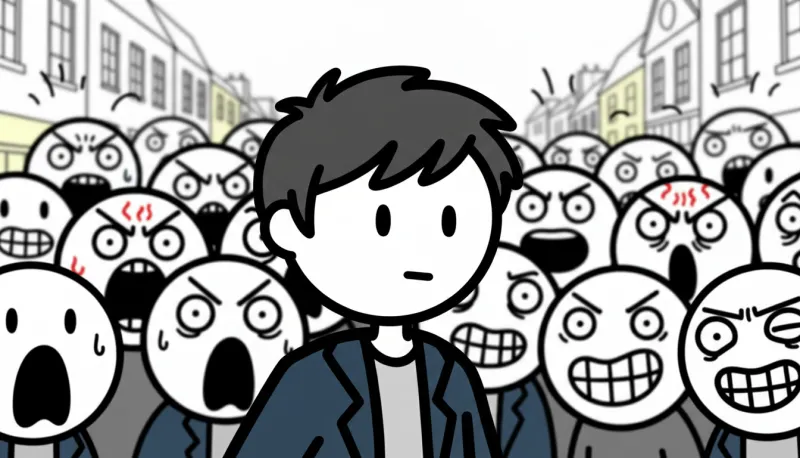
Emotion does the heavy lifting. Mouths open wider than the head, eyes pop, sweat drops fly off and an anger mark throbs on the forehead. The background stays white or a plain pastel, and the set shrinks to the props the joke needs: a desk, a coffee mug, a potted plant. Anatomy, muscles and complicated clothes are left out on purpose, which is why the picture reads instantly at any size and never competes with the voice.
Videos that suit stick figures
- Storytime from your own life
- “The day I set the office printer on fire” works better with a stick-figure you than with a realistic one. Viewers project themselves onto a circle with two dots, and the exaggerated reactions land the punchlines your narration sets up.
- Psychology and habits
- Procrastination, social anxiety, why we buy things we don't need. A stick figure can stand for anyone, so an idea about people in general does not get stuck on one particular face.
- Hypotheticals and odd questions
- “What if you stopped sleeping for a week?” Each step of the scenario becomes one panicked figure and one prop, which keeps a ten-minute answer easy to follow.
- History as comedy
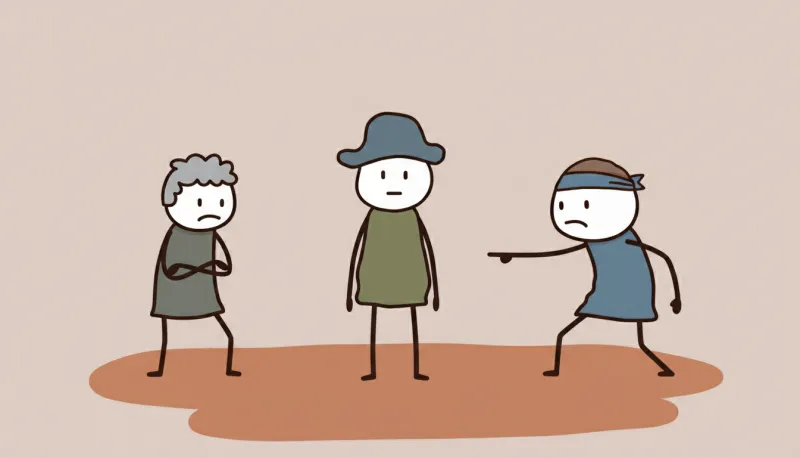
- Peasants, kings and generals can be told apart by a hat, a crown or a headband, like the three villagers further down the page. The seriousness stays in the facts; the drawings stay light.
Stick figures from stories made in Insaga
Frames from stories in this look: a quarrel between three villagers told apart by a hat, a headband and grey curls; a close-up of pure panic; a calm boy in a crowd of furious faces. The palette changes from story to story; the circle heads and marker lines stay.
How to make a stickman video in Insaga
Four steps, from a script you would read out loud to a video with your stick-figure cast.
Paste the script as you would tell it
Storytime works best in the first person and in short beats: what happened, how you reacted, what happened next. Insaga splits the text into scenes along those beats.
Pick Stickman before the first frame
In the “Choose a style for your story” window pick Stickman; every frame of the story is drawn in it. Set the story mode to Characters, so you, your boss and your roommate each get a reference sheet.
Check the faces, redraw the misses
In a stick-figure video the expression is the joke. If a frame shows mild surprise where you wrote pure panic, redraw that one frame; the rest of the story stays as it is.
Voice it and cut it
On a paid plan, pick a narrator from 6,000+ voices or give each figure its own, then add automatic subtitles, your music and transitions, and export an MP4 in 1080p or 4K.
Stickman, 2D, Sketch or Quirky Minimalist
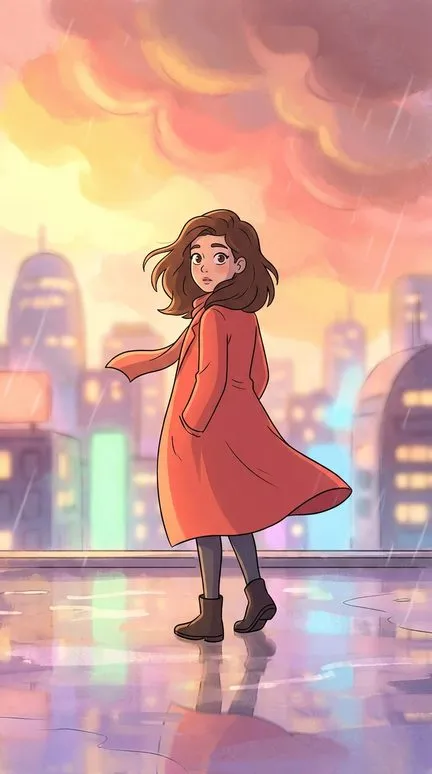
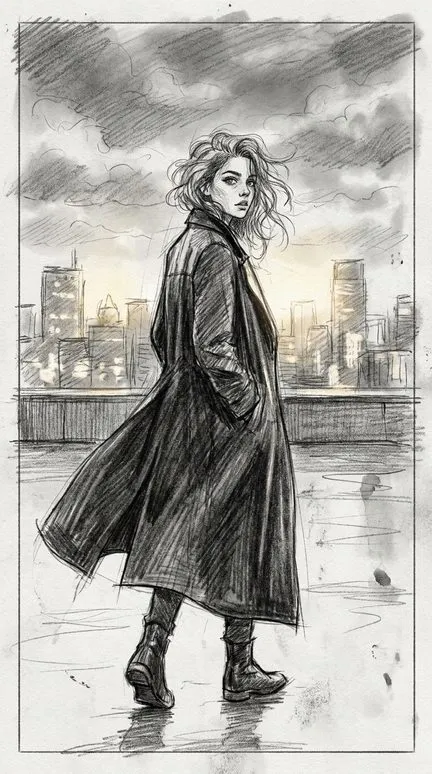
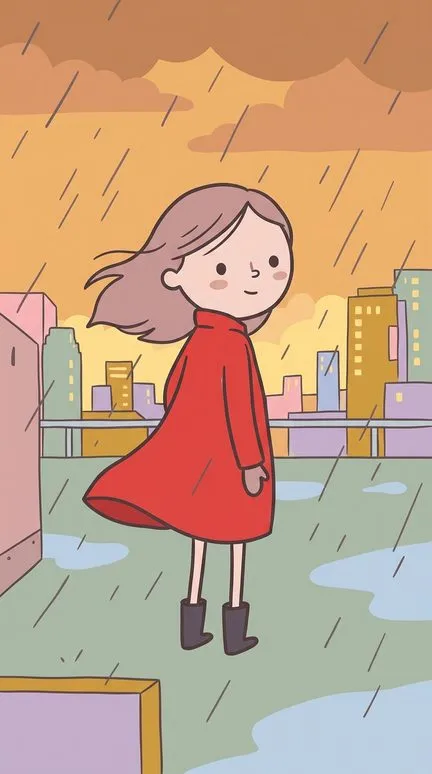
Below, the same girl in a red coat on a rainy rooftop, drawn in four styles. 2D Animation gives her real eyes, shaded hair and a painted city reflected in the puddles: the choice when viewers should care about a character. Sketch turns her into a graphite drawing with realistic proportions, closer to a notebook than to a cartoon. Quirky Minimalist keeps the big head and the simplicity but swaps black marker for soft brown lines and muted pastels, and lowers the volume. Stickman is the only one of the four that shouts: fewest lines, biggest reactions.
Writing for stick figures
Write reactions, not states. “He is nervous” gives a stick figure little to do; “he sweats through his shirt and his coffee shakes” gives it three things to draw. Keep one idea and one or two props per scene. The style has almost no background, so every object you name ends up on screen and looks important.
Give each recurring figure one mark that survives the simplification: a tie, a cap, a headband, a yellow shirt. Viewers have nothing else to tell characters apart by, and the reference sheet keeps that detail in every scene.
Where it falls short: stories that need real places, like travel videos or city walks, and grief told straight. A circle with two dots can be sad, but it always looks a little funny. For a quieter tone see Quirky Minimalist; for weight, Sketch.
Questions about this style
Will my stick-figure self look the same in every video?
Within one story, yes: in Characters mode each recurring figure gets a reference sheet and keeps its hair, clothes and color. For the next video, upload your character's pictures from the previous project and the figure comes back.
Can I use my channel's own accent color?
Stickman keeps a scene to black, white and one or two accents, so name the color where it matters: “a yellow shirt”, “a red scarf”. A clothing color written into the character description goes onto the reference sheet and usually holds from frame to frame.
Can stick figures do action scenes?
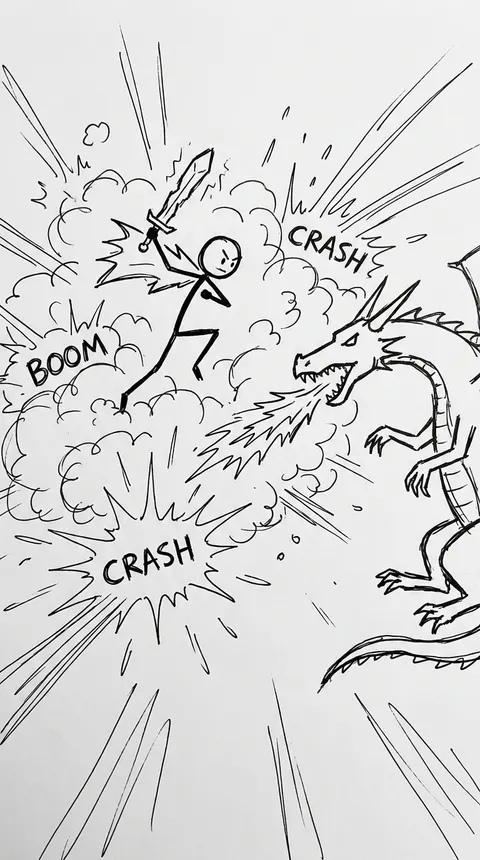
Yes. Fights, chases and explosions work, as the sword-and-dragon frame shows; the lines just get wilder. Detail is what fails: armies and crowded battlefields turn into clutter, so stage one clash at a time.
How many frames does a ten-minute storytime need?
It depends on your pace. An animated clip lasts about eight seconds, so a fully animated minute takes seven or eight scenes, and ten minutes around 75. Many storytime videos hold a frame longer and add a slow camera move in the editor instead.
Can I try it on my script before paying?
Yes. A new account gets 100 credits with no card, enough to draw your stick-figure cast and the first scenes of a real script. Animation, voiceover and export are on paid plans.
Keep going
Turn your story into stick figures
Paste the script of your next storytime and pick Stickman. The first 100 credits are free and need no card.