
Alternatives
OpenArt alternative: when one click has to become a whole series
OpenArt is an AI image platform with many image and video models; One-Click Story turns a prompt or script into a short story video with consistent characters. Insaga is built for the other half of the job: you paste a story or script, it builds the cast and locations, renders every frame in a consistent style, animates the shots, records the voiceover and assembles the video. Below is a plain comparison — what OpenArt does better, where you hit a wall, and what a switch actually looks like.
An honest look at OpenArt
What OpenArt does well
- One-Click Story: a prompt or a script in, a short story video with consistent characters out
- A large catalog of image and video models under one account
- A big image community around the platform
Where OpenArt stops
- Stories are rationed by credits: by OpenArt's own table, Starter covers about 5 one-click stories a month and Pro about 34
- Characters and videos draw on the same credits: about 13 consistent characters or 50 videos a month on Starter, and even the $240 Wonder plan is a credit allowance
- Voiceover isn't on the price list: plans are counted in stories, characters and videos, with no mention of narration or audio
What a whole story looks like in Insaga
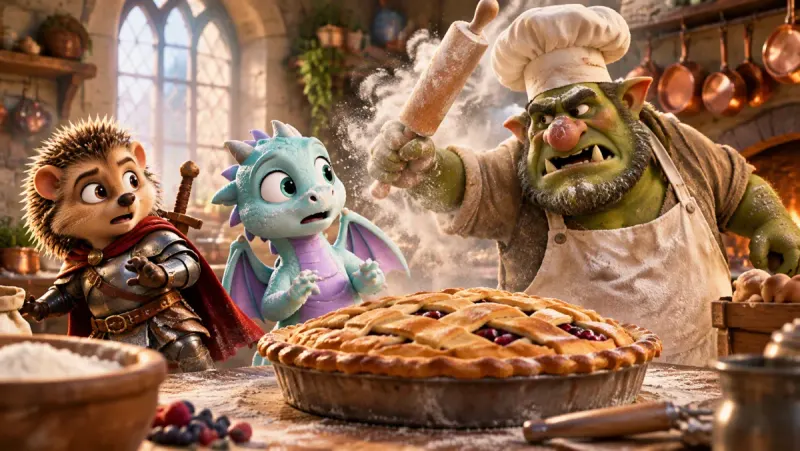
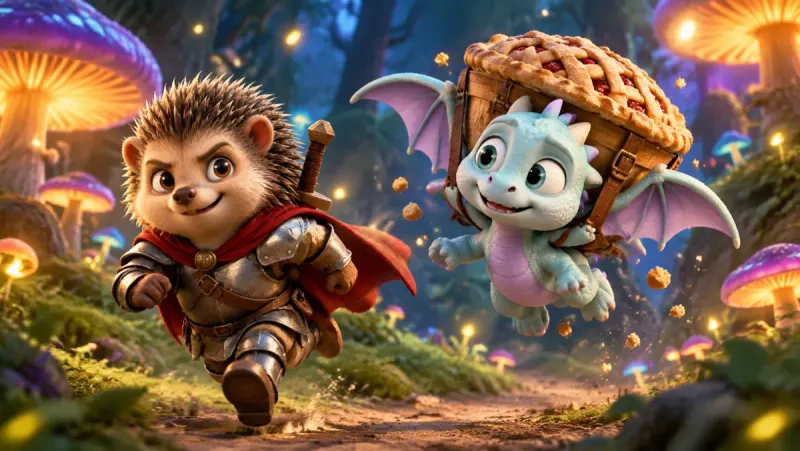
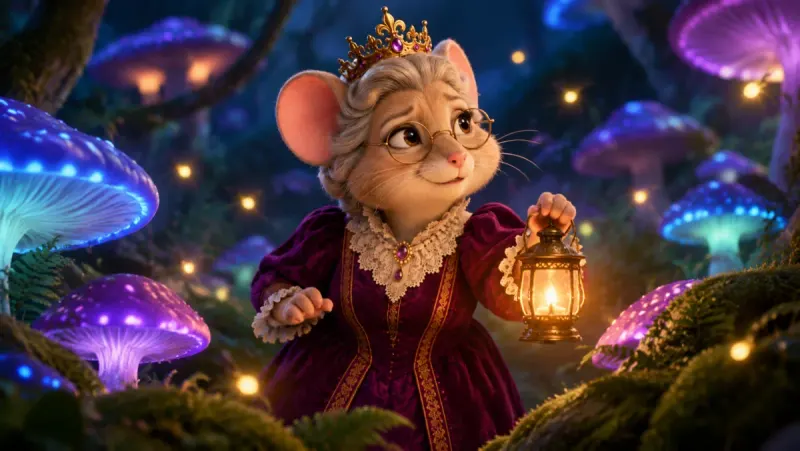
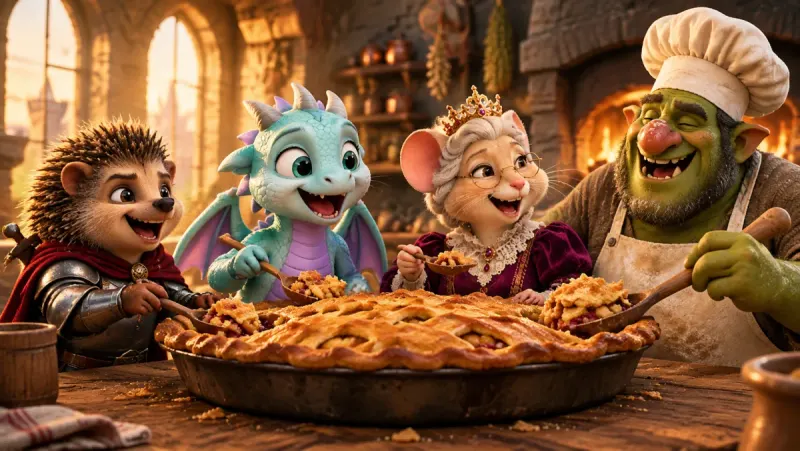
Four frames from a hedgehog-knight fairy tale (3D), made in Insaga from one written story: the same cast in every shot.
OpenArt vs Insaga at a glance
| Insaga | OpenArt | |
|---|---|---|
| Unlimited generation | Yes on Studio — images, animation, voiceover and export with no credits or windows, at a fixed monthly price | No — credits or tokens run out, then you wait or pay |
| Whole story or one prompt? | Full pipeline: story → characters & locations → frames → video → voiceover → montage → export | Script → storyboard, then shots are generated one by one |
| Character consistency | Cast and locations are built once and stay consistent across hundreds of frames | Reference images or a fixed avatar; drift across a long story is on you |
| AI voiceover | Yes, on paid plans — 6,000+ AI voices, a voice per character plus a narrator, or upload your own narration | No |
| Montage / editing | Yes — built-in editor: auto-assembly, 15 transitions, 12 camera motions, 14 filters, automatic subtitles, your own music; MP4 export in 720p, 1080p or 4K (16:9) with no Insaga watermark | No |
Pricing: OpenArt vs Insaga
OpenArt (September 2026). Starter $14, Plus $34, Pro $56 and Wonder $240 per month ($13, $27, $44 and $175 on annual billing) for 4,000, 12,000, 24,000 and 106,000 credits. OpenArt's own table converts Starter into about 5 one-click stories, 13 consistent characters or 50 videos a month, and Wonder into about 150 stories, 353 characters or 1,300 videos.
Insaga. Insaga starts free: 100 credits once, no card, for characters, locations, frames and covers — animation, voiceover and export are on paid plans. Director adds voiceover, export and custom styles, with daily quotas of 250 images and 30 covers, but no animation. Studio is the unlimited plan: images on Nano Banana 2, Nano Banana Pro and GPT Image 2.5, ~8-second 16:9 animated shots on Google Veo models, voiceover and export — no credits, a fixed monthly price, autopilot and an animation queue of up to 500 videos. Studio Max doubles parallel generation (48 threads instead of 24), raises the queue to 2,000 videos and adds GPT Image 2.5 Thinking. See current Insaga plans
The short answer
OpenArt is a good place to design a character and test a story idea in one click. When the idea turns into a series — the same cast every week, a narrator, a proper cut — the story count on the plan becomes the ceiling. Insaga takes the full script, keeps the cast on-model across hundreds of frames, gives every character a voice, assembles the cut in a built-in editor, and on Studio doesn't count stories, frames or videos.
Switching from OpenArt: what the workflow looks like
Paste your story
A script, a short story, a whole book or a video idea. Insaga breaks it into scenes.
Approve the cast
AI proposes characters, locations and props. Adjust anything; from here they stay on-model.
Generate and animate
Every frame in one of 100+ styles (or a custom style from your references, Director and up), in 16:9 or 2.35:1. Then ~8-second animated shots on Google Veo models — unlimited on Studio.
Voice, montage, export
A voice per character plus a narrator (or your own recording), auto-assembly on the timeline, transitions, automatic subtitles and your own music, then a 16:9 MP4 in 720p, 1080p or 4K for YouTube.
Frequently asked questions
Is Insaga a free OpenArt alternative?
You can start free: 100 credits once, no card, for characters, locations, frames and covers. Animation, voiceover and export are on paid plans, and unlimited generation is on Studio, which replaces credit packs with a fixed monthly price.
What does Insaga do that OpenArt doesn't?
It turns a whole story into one finished video in one place. Paste a script or a whole book and Insaga returns a consistent cast, every frame, animation, a voice per character and a subtitled cut — with no per-clip credits on Studio.
Is generation on Insaga really unlimited?
Yes on Studio and Studio Max: images, animation, voiceover and export with no credit tracking. Fair use works through the queue: Studio holds up to 500 videos in the animation queue, Studio Max up to 2,000 and runs twice as many generations in parallel (48 threads vs 24). Free and Director are not unlimited: Free is 100 one-time credits, Director has daily quotas of 250 images and 30 covers.
Which AI models power Insaga?
Images: Nano Banana 2, Nano Banana Pro and GPT Image 2.5, plus GPT Image 2.5 Thinking on Studio Max. Animation: Google Veo models, ~8-second 16:9 shots. You never buy credits per model.
Should I cancel OpenArt?
Only if you were using it to produce narrative videos. If you need OpenArt for a specific one-off asset, keep it as a side tool — Insaga is the place where the whole video gets made.
Other comparisons
Try the OpenArt alternative that finishes the video
Start with 100 free credits, no card: paste a story and get its cast, locations and frames. Voiceover and export start on Director; animation is on Studio.
All product names and trademarks belong to their respective owners and are used here for identification and comparison only. Competitor prices and limits are quoted from public pricing pages as of September 2026 and can change — check the vendor's site before deciding.